

The Capoeira term is starting next week, hooray! And we know that this activity is a super way for children and young people to stay active for life, develop respect and discipline, and grow self-confidence. Hence, in this blog post we want to give parents a chance to get to know what they can do to support their child thrive in capoeira.

At Axé Boom Boom we create supportive, safe and friendly environment for all the children to exercise and love to hear parents’ feedback on our work to back it up:
“My child enjoys attending capoeira classes because it helps him release his “endless energy”. His behaviour positively changed as he’s learning to listen more. The thing I like the most about capoeira classes is how children are learning through play and having fun”
– Mum of class participant
“I feel satisfied with my child’s skills development because he’s making new friends learning to play as part of the team as well as showing his capoeira skills on his own. Well done Kasia & Grześ! You’re running fabulous classes for ALL ages!”
– Mum of class participant
Let’s get into the how to support my child to succeed in Capoeira
Your Support & Encouragement
Firstly, we encourage all children to follow our rules at the classes. Here they are below, you can read more about them in this blog post.
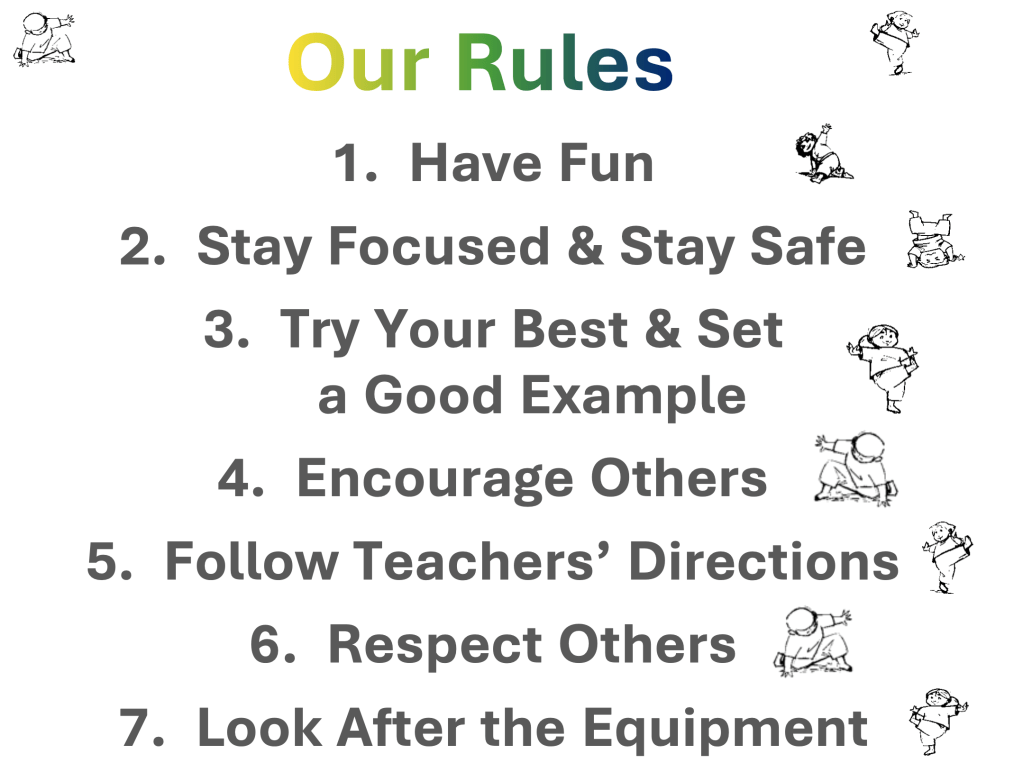
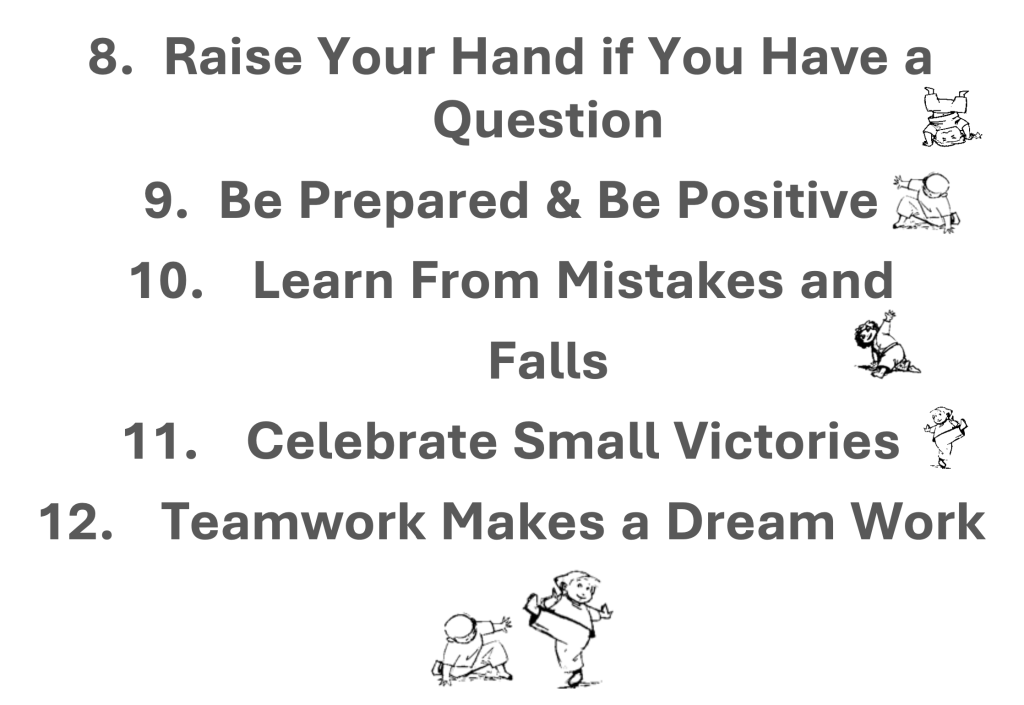
We see how participants’ parents at our classes actively support and remind the children to follow these rules and we’re just super grateful for that.
Know Everyone’s Role
We all want to support, guide and encourage our children in all aspect of life, including after school activities like Capoeira. Nevertheless, it’s vital to make sure you enjoy watching the class from the side, ask all questions before or after the session to make sure you don’t interfere with the class process. Please remember that our instructors are experts in their field with a wealth of experiences and knowledge and always keep your child best interest at their hearts.
“We build a child-coach relationship of mutual respect and trust so it’s best to trust us as we are best prepared to provide assistance and help during classes. It’s best to trust our expertise and let us to do our job.”
– Kasia – Instructora Risada

It’s important as by giving your child the space to absorb moves and knowledge, and develop, you can help nurture their independence and confidence, and your own child-parent relationship with them.
The Significance and Importance of Attending all of the Classes
Regular presence at the classes is vital to achieve all benefits of Capoeira training. Most of our students attend 1-2 sessions per week and that is a great way to keep consistent attendance that will support child’s development and a sense of discipline and commitment. All being key principles in Capoeira and important values for all successful people out there.
Get Familiar with Capoeira
It’s best to become familiar with what we are teaching them in class, and be aware of what kind of Capoeira is appropriate to their stage of physical and emotional development. We know it can be frustrating seeing your child doing what seems to be the same things again and again: as adults we can spot mistakes easily, knowing what adult Capoeira looks like.

For children this may take more time to learn so remember, if we nurture their enthusiasm and coordination now by revising moves many times, then there is nothing they won’t be able to achieve in the future.
Encourage Musicality
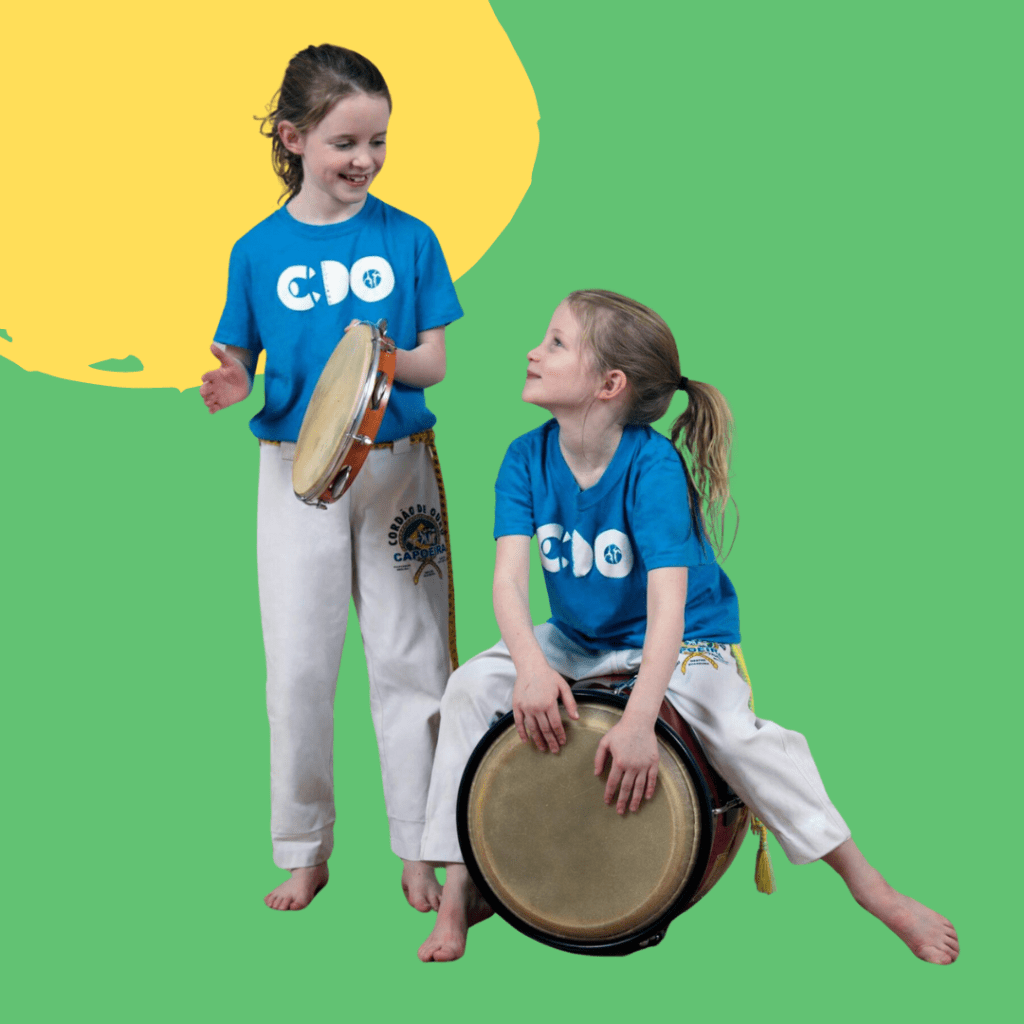
Another brilliant thing you can do is encourage their Capoeira musicality by learning some of the songs yourself or capoeira rhythms on Atabaque drum or Pandeiro – tambourine. There are many songs out there so we encourage you to listen to them and learn the songs that we teach at the classes. We have 1 song for the month and print out the lyrics for you.
Grab us before or after the class to get to play instruments for a few minutes or join adult classes and learn all of Capoeira there! Get in touch if you’d like to start Capoeira.
Understand Age Grouping & Be Patient
Each age group has its own version of how they play Capoeira, appropriate to their emotional and physical stage. Below is some information on how this informs our teaching. However, as you know, every child is different, and as such, their development will often cross age divisions therefore our classes are a mix of age groups where children can train with different age children and learn from one another. Patience is the key. Capoeira is a fantastic sport that is also challenging and require time to develop, and we want your child’s Capoeira to grow as they do, so they’ll love doing it their whole life!

Ages from 4-6:
Capoeira for this age group is a game based on a physical narrative of easily achievable movements done with a friend and in groups. Children are growing rapidly at this age, placing real challenges on their physical abilities. As such, emphasis in this class is focused on developing their balance, aerobic fitness and basic coordination, using balls, hoops and other props, as well as Capoeira movement work. The emphasis is on learning through play and movement and less on getting Capoeira moves “right”, as the class focuses more on getting the children moving and interacting. In class, we begin to teach the music of Capoeira: learning the name of instruments, how to play a simple rhythm, and sing a short song. Broader aims in this age group are to develop good habits of patience, turn taking and working in pairs and group/s.
Ages 7-10:
In this age range, children learn to “jam” with friends, putting their favourite Capoeira moves in the Roda, whilst improving connectivity. A heightened sense of self can lead to uneven progress and drops in confidence, and as such, the goal for this age range class is to bolster your child’s skills and motivation by teaching Capoeira techniques alongside lots of simple coordination exercises. We aim for every lesson to have some simple element that can give them the “I learned this today” feeling, whilst they continue to develop other (sometimes small or hidden) skills under the surface, which will help them blossom fully later. In this age group we teach them to vary sounds on the instruments, keep rhythm with others, and lead a song in the Roda. Broader aims in this age group are to develop the child’s ability to start to give basic constructive feedback to peers.
Ages 9-11:
In this age range children learn to develop their Capoeira personality, starting to introduce elements of simple, respectful gamesmanship. They will start adding details to what they do, but will still find some moves too physically demanding. As such whilst teaching them more adult-like Capoeira sequences, we also enjoy fun team exercises, though we can demand more precision in the way they execute their Capoeira movements. The focus is still on cooperation: encouraging them to adapt their “solo repertoire”, to develop rehearsed and impromptu sequences that work with the strengths of others. In music, we start teaching them complicated verses, and introduce the idea of keeping rhythm whilst singing. The broader goal of this age range is “learning to train”, developing a positive attitude towards physical fitness.
Ages from 12
In this age range, students will learn how to be competitive with friends through surprising acrobatics and tricky take-downs. This age sees children go through their growth spurt, bringing greater physical strength, but drops in flexibility, coordination and energy. As such, whilst Capoeira classes focus a lot on speed and power in technique, we will also do general strength and conditioning exercises. Though it won’t be long before they are able to train with adults, as they start to develop sophisticated acrobatics and learn how to fall safely, we still expect them to enjoy elements of the simpler games. In the musical element, we teach students to start to lead Capoeira songs whilst holding rhythms on instruments. The broader goals of this Capoeira class are to give them an environment to learn how to deal sensibly with difficult emotions and “train the trainer” if they choose to teach in the future.


Celebrate Their Achievements
Lastly, we encourage you to celebrate your child’s development and all achievements, small and big. We celebrate them at every class and even wrote a blog about it.
We also have a big group celebration of their achievements in a form of an annual event called Batizado e Troca de Cordas.
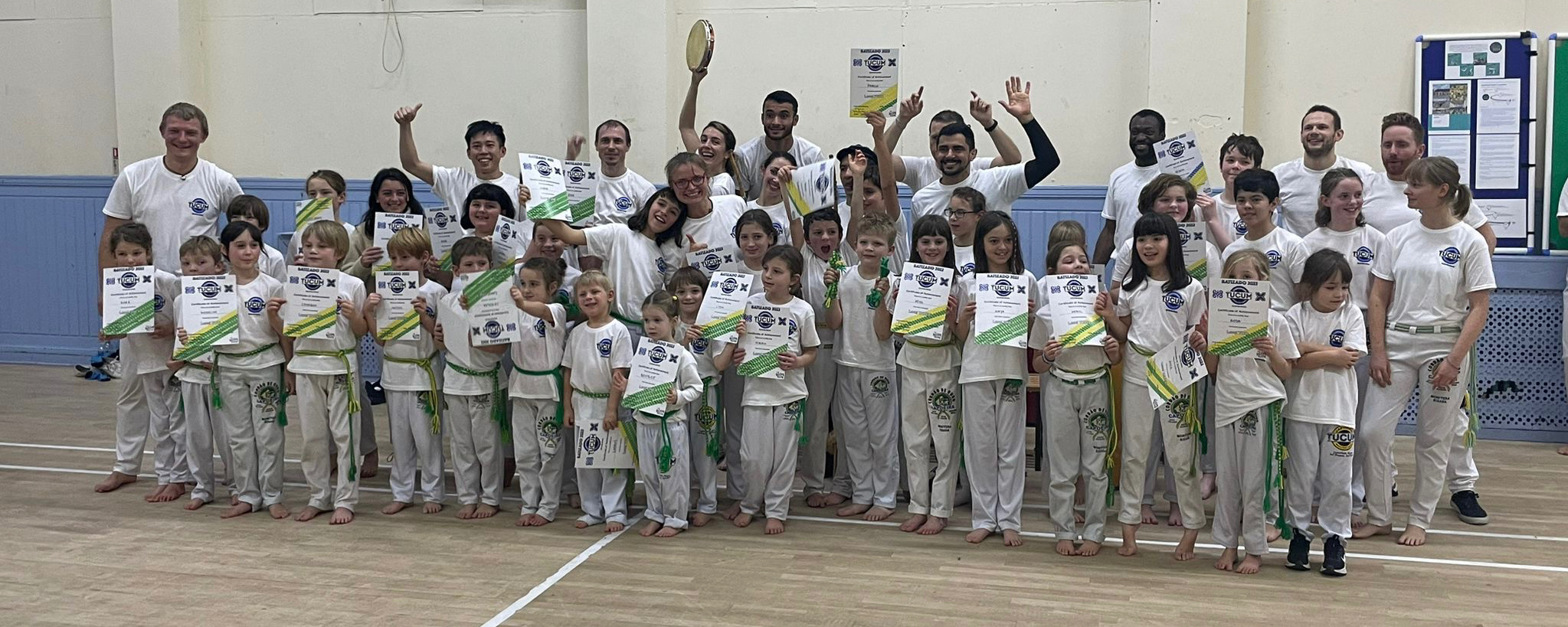
This one is a big event with the whole Tucum Capoeira group. It includes grading ceremony, where children can receive their first belt, or move up grades. If a student takes the first belt, then is welcome into the world of Capoeira and can be “baptised” with a nickname hence we call this type of events “Batizado” (pronounced “ba-tchi–zah-doh”), which means baptised. If students move up grade, they change the belt so Troca de Cordas.
In Summary
Well done for reading this long blog post 🙂 Here is a quick summary of what’s the most important:
- Your Support & Encouragement
- Know Everyone’s Role
- The Significance and Importance of Attending all of the Classes
- Get Familiar with Capoeira
- Encourage Musicality
- Understand Age Grouping & Be Patient
- Celebrate Their Achievements
As always get in touch if you have any questions.
Keep Training
Kasia





 axeboomboom.org